
You can't go home again
You can... but it's never the same

A long time ago, during another transitional time of my life, I returned to my hometown because the job market sucked — hello “Reaganomics” — and post-university life wasn’t at all working out the way I had intended. I spent a few months back home with the parents (do not recommend) and read as much as I could while interviewing like mad to get out of there. One book I read during this time and have been thinking about a lot lately is Thomas Wolfe’s “You Can’t Go Home Again.”
Thomas Wolfe died tragically in his late 30s in 1938 and never lived to see most of his work published, but William Faulkner and Sinclair Lewis both considered him one of the best novelists of their time. Sadly, I have found that most people immediately think of “The Electric Kool-Aid Acid Test” Tom Wolfe and have never even heard of Thomas Wolfe of Asheville, North Carolina. When I was looking up information about his life and works, I found a fascinating article from 2009 that talks about his travels across America during the final months of his life. This paints a picture of someone filled with curiosity and wonder, what a shame to have lost him so young.
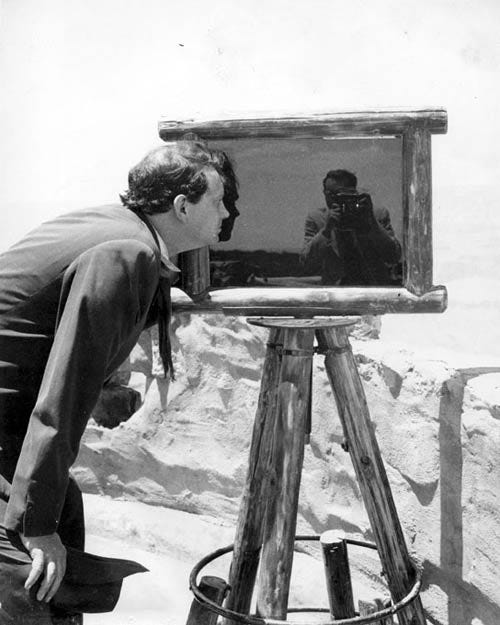
In “You Can’t Go Home Again,” the protagonist is a novelist returning to his hometown just after the stock market crash of 1929 and following years of having traveled and lived overseas in Europe, much like Wolfe himself1. He finds himself feeling isolated and different from his family and friends in America and increasingly disturbed by global events. The parallels to our current climate in the USA and how I am feeling at the moment could not be more obvious.
I believe that we are lost here in America, but I believe we shall be found. And this belief, which mounts now to the catharsis of knowledge and conviction, is for me --and I think for all of us-- not only our own hope, but America's everlasting, living dream. I think the life which we have fashioned in America, and which has fashioned us --the forms we made, the cells that grew, the honeycomb that was created-- was self-destructive in its nature, and must be destroyed. I think these forms are dying, and must die, just as I know that America and the people in it are deathless, undiscovered, and immortal, and must live.
Thomas Wolfe, “You Can’t Go Home Again”
I have heard other long-term expats describe a sense of no longer feeling like they fit in back home, and maybe (like me) you feel you never really did. I think that I always had a sense of being different from my peers since my mother was a post-WWII immigrant to the US herself, and both of my parents were about 10 years older than those of my peers, so I never really fit in with the surfers or the jocks. Added to that a restless spirit and desire to travel and see as much of the world as I could, so when the opportunity arose to move abroad on a sponsored visa I jumped at it. My husband and I didn’t think it was crazy, but we were shocked to see how many of our family and friends did. I remember how horrified my mother was when I told her we were moving to Australia, a place she associated with no one ever returning from due to the long distance by sea (the only way people used to travel there, especially in the 1930s and 1940s). And if you look at it from the historical context, it makes sense.
Of course I did come back to the US many times after moving abroad, which I promised I would. And for a few years due to work obligations in Silicon Valley, I was able to come multiple times a year. But then family members died, health issues occurred, a global pandemic hit, and time marched on. One day, I looked up and realized that if we didn’t leave Australia then we most likely would be spending the rest of our lives there and we already could see that the cost of living there was going to make our retirement very difficult. Plus, our son was moving back to the US for Grad School, we had a 10-year-old dog that was getting to the outer edges of being able to handle a 17-hour flight in cargo2 , and still had unfinished business to attend to back in the US. So we arranged to sell things, ship things, donate things, and left at the end of 2023. We had no idea how much the US had changed since we had been gone, nor did we realize what 2024 had in store for us.
The best way I can describe how I feel today is “neither fish nor fowl.” My husband and I have been gone long enough, and been through our own significant changes, that we know we aren’t the same people that left. And our friends have all lived through their own trials and tribulations over the past 15 years, so they aren’t the same either. I think some of us are quite frankly shell shocked for lack of a better word, just trying to make sense of things and figure out what comes next and how to survive.
As for us, we aren’t sure whether this is going to be a short layover on the way to someplace else or a bit more permanent. At the moment as I approach the one-year anniversary of my (somewhat unexpected) unemployment, it is starting to feel more and more like a temporary stop over on the way out of here and onto someplace perhaps a bit more affordable. I guess we shall see what the next few weeks bring. I keep coming back to this one line above all else, "I believe that we are lost here in America, but I believe we shall be found."
The New York Times Book Review from 1940, which is excellent.
Cargo hold is the only way an animal can be transported into or out of Australia. Don’t even get me started on that story… nightmare.
I really enjoyed your post . I think you captured what it's like to go home from being an expat very nicely. I want to share with you what I said to my son when he was 23 and I told him I was leaving the US for Mexico. Among other things he said "but Mom what if you don't like it?" And I answered. "It's not the last decision I get to make." It turns out that was 30 years ago and I'm still here with no intentions of moving anywhere else at age 81. But I have never regretted this decision. And it certainly not a time I want to be back in the US. I think it's important that we all share these stories.